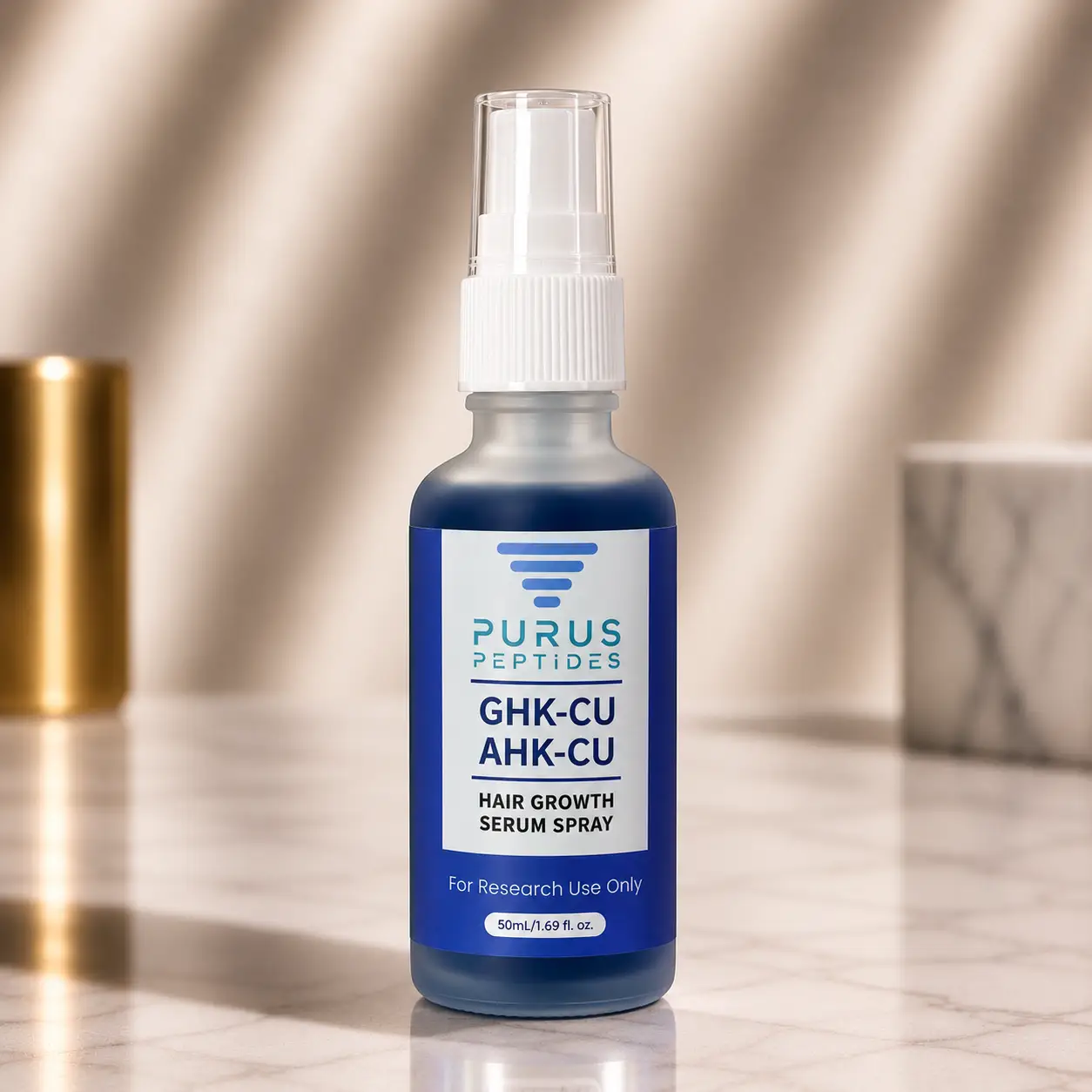
AHK-Cu and GHK-Cu represent two distinct copper-binding tripeptides investigated for their interactions with cellular signaling pathways, extracellular matrix regulation, and copper-dependent biochemical processes. This dual-peptide formulation combines complementary molecular structures associated with fibroblast activity, extracellular matrix remodeling, and cellular homeostasis.
AHK-Cu (Alanine-Histidine-Lysine-Copper) is a synthetic copper-binding tripeptide investigated for its potential influence on dermal papilla cell activity, growth factor signaling, and extracellular matrix regulation. Experimental research has examined its interactions with cellular pathways associated with follicular biology, including mechanisms involved in cell proliferation, apoptosis regulation, and the maintenance of follicular microenvironments.
GHK-Cu (Glycyl-L-Histidyl-L-Lysine-Copper) is a naturally occurring copper-binding tripeptide extensively investigated for its involvement in extracellular matrix remodeling, fibroblast signaling, and copper-mediated enzymatic activity. Research has explored its influence on collagen and glycosaminoglycan synthesis, matrix metalloproteinase regulation, and cellular responses associated with oxidative stress and tissue remodeling.
Together, these copper peptide complexes provide a platform for investigating the relationship between copper ion coordination, peptide-mediated cellular communication, and biochemical pathways associated with extracellular matrix dynamics and follicular cellular regulation.
Primary Research Applications
Copper-dependent cellular signaling pathways
Dermal papilla cell activity and follicular biology
Extracellular matrix organization and remodeling
Fibroblast proliferation and cellular regulation
Collagen and glycosaminoglycan synthesis pathways
Growth factor signaling and cellular communication
Matrix metalloproteinase activity and regulation
Oxidative stress response and cellular homeostasis
Peptide-mediated copper ion coordination
Research Overview: This dual copper-peptide complex integrates AHK-Cu and GHK-Cu into a single spray formulation for the investigation of complementary biochemical mechanisms associated with follicular cellular activity, extracellular matrix homeostasis, copper-dependent enzymatic processes, and cellular signaling regulation.