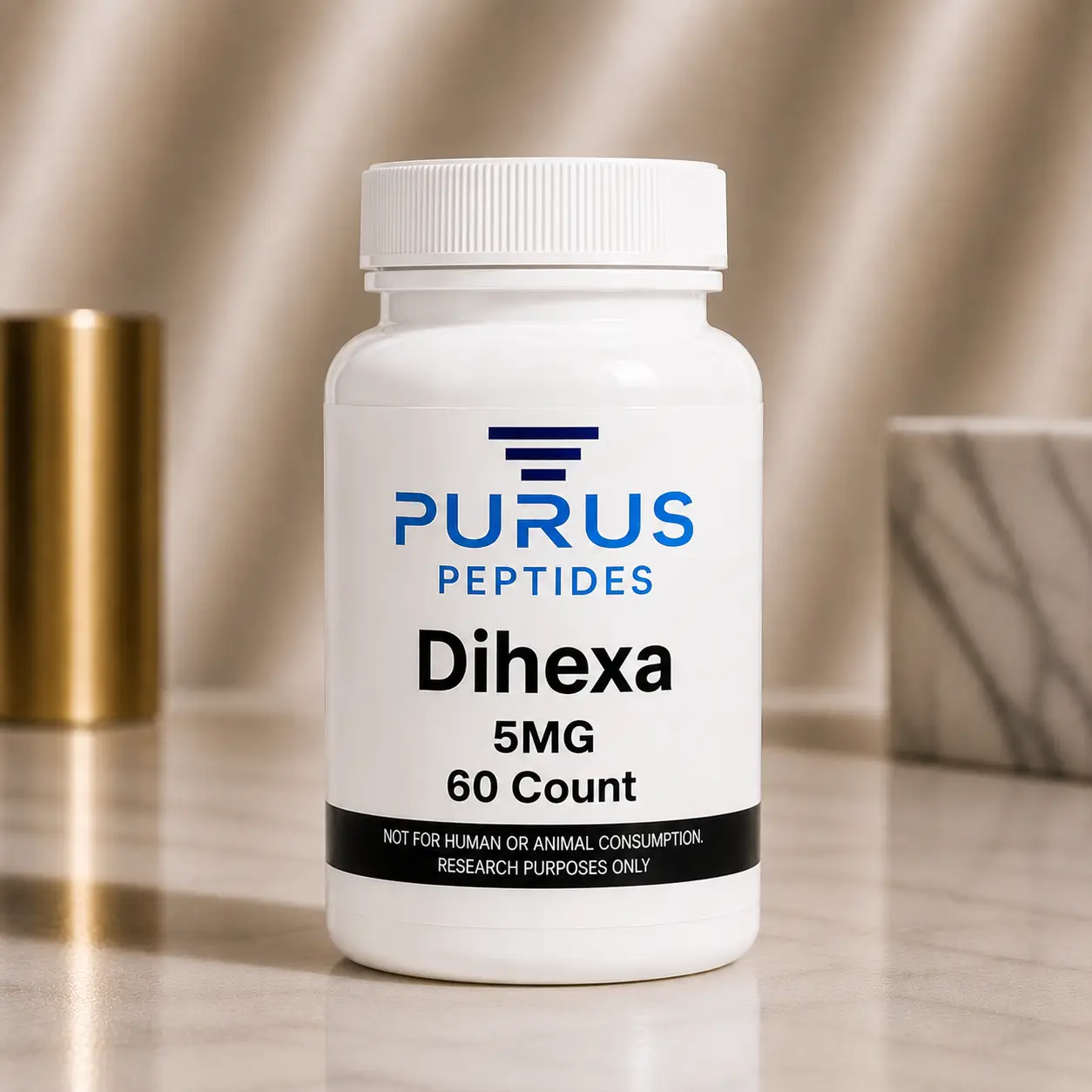
Dihexa is a small-molecule peptidomimetic research compound being investigated in preclinical studies for its potential effects on synaptic plasticity, neuronal connectivity, learning, memory, and neuroregeneration. Researchers are also exploring its interaction with the HGF/c-Met signaling pathway and its potential role in supporting neuronal growth and cognitive function in experimental models.
Store in a cool, dark place out of direct sunlight. For long term storage keep in refrigerator. Keep lid tightly closed to avoid moisture
Product Name: Dihexa
CAS Number: Â 1401708-83-5
Molecular Formula: C₂₇H₄₄N₄O₅
Molecular Weight: 504.66 g/mol
PubMed ID: 129010512
Dihexa is a synthetic small-molecule peptidomimetic derived from angiotensin IV that has become an area of interest in neuroscience research due to its potential effects on neuronal growth, synaptic plasticity, and cognitive function. Unlike traditional peptides, Dihexa was engineered to improve stability and bioavailability while retaining biological activity, making it a unique research compound for investigating mechanisms involved in learning, memory, and neuroregeneration. Current preclinical studies have focused on its potential to promote the formation and maintenance of synaptic connections, which are essential for communication between neurons and the processes underlying memory formation and information retention.
One of the primary areas of investigation involves Dihexa’s interaction with the hepatocyte growth factor (HGF)/c-Met signaling pathway. This pathway plays a significant role in neuronal survival, cellular growth, tissue repair, and synapse development. Laboratory research suggests that modulation of this pathway may contribute to increased synaptic density and enhanced neuronal connectivity in experimental models. As a result, researchers have explored Dihexa as a tool for studying the biological mechanisms associated with neuroplasticity—the brain’s ability to reorganize and adapt by forming new neural connections throughout life.
Dihexa has also been investigated in preclinical models of age-related cognitive decline, neurodegenerative diseases, traumatic brain injury, and other neurological conditions characterized by synaptic dysfunction. Experimental studies continue to evaluate its potential effects on learning, memory consolidation, and long-term cognitive performance while examining its influence on neuronal repair and regeneration following injury. Researchers are also exploring how Dihexa may contribute to a better understanding of the molecular pathways involved in maintaining healthy neural networks and protecting against progressive neurological damage.
Â
All items available on this website are intended exclusively for research and development purposes, including laboratory and analytical applications, and are not meant for human or animal consumption in any form. The products are not designed to diagnose, treat, cure, or prevent any medical conditions, and their associated claims have not been reviewed or approved by the U.S. Food and Drug Administration. Purus Peptides operates solely as a supplier of research chemicals and is neither a compounding pharmacy nor an outsourcing facility as defined by sections 503A or 503B of the Federal Food, Drug, and Cosmetic Act
When you choose two of the same item get the second one 50% off!